戒烟后3-6个月口腔与牙周改善情况
Month 1 (Dramatic Change)
Frequent bleeding, amplified taste, messy saliva, dark purple gums
Month 3-6 (Mid-Term Maintenance)
Bleeding controllable, breath stable, slower improvement but solid foundation
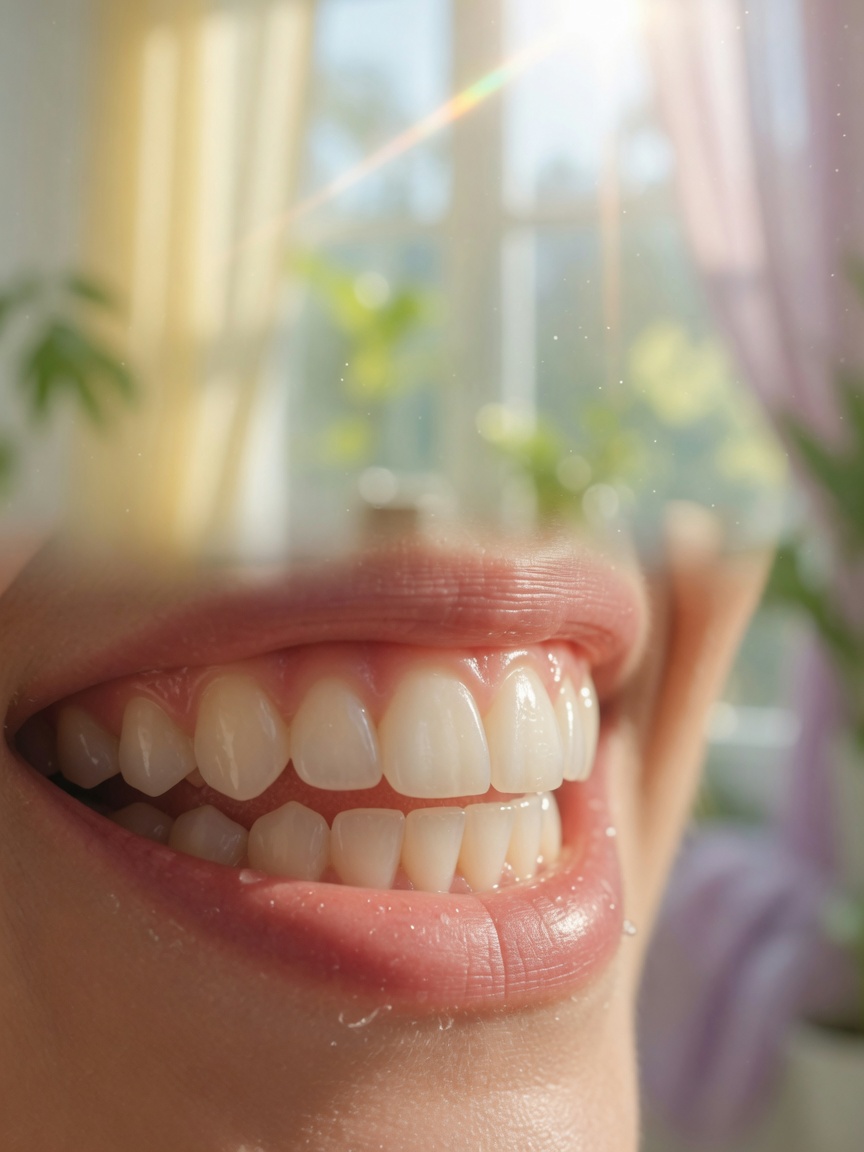
Oral and Periodontal Improvement 3–6 Months After Quitting Smoking
On day 90 of quitting, I didn't celebrate. Instead, I flipped the "oral journal" I'd kept during the first month to a blank page and re-measured my benchmarks: does my toothbrush still spit pink, do I dare lean close to the mirror and exhale to check morning breath, does the floss between my lower front teeth come out clear or light pink. After 11 years of smoking with a peak of 1.5 packs a day, the first month was all about bleeding, messy saliva, and taste overload. Months 3–6 tell a different story — **no more daily scares, but now you're tested on whether you can believe in "slow improvement" and keep doing the boring maintenance when things "feel okay."**
Many people ask: after three months of quitting, shouldn't the gums be "just about healed"? My honest take: **Months 3–6 are the "mid-term inspection window" for the mouth and gums, not the finish line.** The blood supply returns, breath stabilizes, and scaling works better than when you smoked — those are real. But the bit of bone already lost, the receded gum margin, the teeth that were once loose — they won't auto-repair just because you've been smoke-free for six months. Below is my real experience, written so you can compare notes, not just read another hollow "quitting is healthy" slogan.
I. Why Write Specially About the "3–6 Month" Window
The first month was noisy and dense: bleeding, dry sticky mouth, amplified taste. By month two, most people hit a "seems normal" plateau — and that's exactly where things go wrong. I've watched two smoking friends: one ditched floss around day 80 because "my gums don't bleed much anymore" and by month four had more bleeding sites on probing than month two. Another lit up "just one" at a three-month celebration party, then spent the next two weeks watching both bad breath and gum sensitivity come roaring back — nearly derailing the whole quit.
Dental medicine has evidence supporting the benefits of quitting for periodontal health: stopping smoking reduces the risk of developing and progressing periodontitis, and may improve responses to non-surgical periodontal treatment. The damage smoking does to periodontal tissues gradually fades the longer you stay quit. UK oral health bodies make it clear — after quitting, gum blood supply improves, healing is easier, gum disease treatments typically work better, and dentists can sometimes see changes in gum condition within weeks.
These findings set my expectations: **the mid-term should show "controllable, maintainable, more responsive to treatment," not "time reversal and jawbone regeneration."**
I split months 3–6 into two sub-phases:
| Phase | My actual oral theme | Most common mistake |
|---|---|---|
| ~Months 3–4 | Bleeding sites drop, breath stabilizes, taste is no longer "hypersensitive" | Thinking you're past it, procrastinating on cleaning and maintenance |
| ~Months 5–6 | Measurable improvement slows, it's all about habits and checkups | "Just one" relapse, sugary compensation causing plaque resurgence |
("Measurable" means counting bleeding sites, comparing with last probing record — not just going by "feels sort of better.")
II. What Actually Gets Better in the Mid-Term
1. Gums Stop Being "Falsely Calm" and Learn to React Normally
When smoking, nicotine and other compounds constrict gum blood vessels, suppressing inflammation. Many people go years "brushing without bleeding" and mistakenly think their gums are healthy. Month one — circulation returns, bleeding spikes — I was freaked out. Around **day 90**, things shifted:
- Using the same soft-bristle small-head brush and the same Bass technique, days with pink spit dropped from "almost every day" in month one to "1–2 mildly pink days per week."
- Nightly flossing on lower anteriors: from month four onward, the floss came clean most nights; only when I'd stayed up late working and hadn't brushed the interproximal surfaces well would it show light pink.
- The "permanent dark purple" look at the gum line faded slightly. At a checkup around month five at a dental clinic, my anterior labial gum color was closer to pink under the light. The dentist said: "Your gums now look like tissue that can talk — when there's inflammation, it shows, instead of silently rotting."
**My take:** The core of mid-term gum improvement isn't "never bleeding" — it's **bleeding becoming predictable and attributable**. You know whether you missed a spot or pulled an all-nighter, instead of mysteriously having a mouth full of pink. That's healthier than "zero bleeding."
2. Blood Supply & Healing: Recovery After Cleaning and Scaling Is Faster Than When You Smoked
Around month four, I had a maintenance scaling (about three months since my last one). The contrast was vivid:
- **Smoking days** (a year before quitting): prolonged bleeding after scaling; once, the lower posterior gum margin stayed sensitive for nearly a week — even warm porridge stung.
- **~Day 120 after quitting**: same ultrasonic scaling + polishing. Slight soreness that evening, **by day 3** I could brush normally, and by day 5 sensitivity was down to just a couple of interproximal spots.
This aligns with public knowledge: after quitting, gums get better blood supply and heal more easily. People who keep smoking can have significantly worse periodontal healing responses (some clinical sources describe roughly half the healing response in smokers — individual variation is large; I just use it to understand "why doctors keep pushing quitting," not as my personal lab report).
A mistake I made: around month three I got impatient about "whitening" and bought peroxide-heavy whitening strips. After two nights, my gum margins turned white and stung, and bleeding rebounded for three days. Mid-term tissue is repairing — **don't pile on aggressive chemical whitening**. Get plaque and calculus under control first; that's far better value than chasing whiteness.
3. Breath & "New Tar Stains": The Strongest Positive Feedback, and Easiest to Overlook Yourself
Month one breath was chaotic — changed saliva, thick tongue coating, old pockets not yet cleaned out. Entering month three:
- Morning breath: from around day 100, I dared to smell myself up close; the sour-stale smell was much weaker. My partner's rating went from "your mouth smells like an ashtray" to "sometimes just regular morning breath."
- Tooth color: old tar stains won't vanish overnight, but **new yellow-brown deposits slow way down**. By month six, comparing phone photos from before quitting, the "tea + tar stain" border at the cervical margin of my central incisors hadn't widened noticeably. Real stain removal needed a dental polish, not mouthwash ads.
- Tongue: the taste after a light scrape went from "overnight ashtray" to "mild bad breath or nearly odorless."
**My view:** Breath improvement is the strongest mid-term positive reinforcement and an unspoken anti-relapse line. Once you start smoking again, bad breath often returns first, then gum issues. Treat "what your close ones say about your breath" as your dashboard — more useful than social media check-ins.
4. Oral Flora & "Oral Environment": You Can't See a Microscope, but You Can Feel Stability
Literature and reviews generally agree that quitting helps reduce inflammation, improve periodontal healing, and shift the oral microbiome toward healthier composition. I didn't run expensive microbiome sequencing; I used life indicators:
- After month three, morning tongue coating thinned — no more daily "scraping off a yellow layer."
- Becoming more sensitive to sweets, I briefly compensated with milk tea. By month four, tooth surfaces felt sticky and coated, and bleeding sites increased — **loosen plaque control for a moment, and your periodontium won't cut you slack just because you quit smoking**.
- Going back to "water rinse after meals + nightly floss + limiting sugary drinks" for two weeks brought bleeding back down.
The mid-term truth: **Quitting removes tobacco as a massive disruptor, but you still have to clean up the battlefield yourself.**
5. Taste & Saliva: From "Dramatic" to "Plateau Stable"
Month one taste was like volume cranked to max; months 3–6 settled into "clear but not sharp":
- The layers of plain congee, apples, and steamed fish were still there, but the revulsion to roadside barbecue faded — meaning it wasn't a permanent "quit-smoking clean-nose" effect; my threshold had just normalized.
- Dry mouth: still dry in air-conditioned rooms in the afternoon, but less frequent than the "must have candy during meetings" level before quitting. Stable daytime water intake around 1.5–2 L put me in the best state.
- Weight: I'd gained about 1.2 kg by month three due to improved taste; by month five, with controlled sugary drinks and added walks, I'd dropped 0.8 kg. A healthier mouth doesn't give you a metabolic free pass — that belongs in a mid-term chapter.
III. Problems You Still Need to Watch in Months 3-6 (Many People Crash Here)
1. Support Tissue Already Lost Won't "Grow Back" Automatically from Quitting
Attachment loss and alveolar bone resorption caused by periodontitis — mainstream clinical consensus is that controlling inflammation and stopping progression is achievable, but expecting full bone and attachment-level regeneration is unrealistic for most people, unless they qualify for specialist procedures like guided tissue regeneration, and even then it depends on oral hygiene and systemic factors.
My objective findings at the month-six checkup:
- Two lower molars still had shallow-to-moderate probing depths (the dentist said they were stable compared to before quitting, not deepening further).
- One area of gingival recession on an upper anterior tooth — the root surface was slightly "more exposed" than before quitting. Partly because the swelling had gone down, making the gingival margin position more honest — it looked like "more recession" but was actually edema resolution.
- No new visible loosening in any tooth; but one tooth that had been Grade I mobility still had limited improvement in looseness — I still avoid chewing hard food on that side.
**My judgment:** In the mid-term, obsessing over "my teeth must be as solid as an 18-year-old's" will only push you back to smoking. A more reasonable victory condition is: probing depth not progressing, bleeding sites declining, looseness not worsening, function adequate.
2. "Feeling Better" Does Not Equal "You Can Stop Maintenance"
Three months smoke-free, many people think "I can neglect my mouth now." Quite the opposite: this phase is about regular professional cleaning and home plaque control.
Public guidance gives a practical rhythm: you don't stop needing cleanings after quitting; old calculus and tar stains won't vanish on their own; getting a maintenance cleaning around month three helps clear new buildup. My execution:
- Month 3 and Month 6 each get a maintenance scaling (those with periodontitis history should follow their dentist's shorter interval — possibly every three months instead of the typical half-year).
- Home care: Soft-bristle brush twice daily x 2 minutes; floss at least once daily full-mouth; water flosser as a supplement, not a replacement for flossing interproximal surfaces.
- Change brush head every 3 months; I was still using a splayed brush head in month four, which irritated my gum margins — immediate improvement after replacing it.
A pitfall: during a week-long business trip in month five, I brought only a brush, no floss. When I got back, my lower anterior interproximal areas bled for three consecutive days. The mid-term isn't always defeated by nicotine cravings — sometimes it's one missing roll of floss in your suitcase.
3. If Bleeding Gets "Noisy Again" in the Mid-Term, Check Cleaning and Relapse First — Don't Blame Quitting
The month-one bleeding peak can be understood as "revealing" after circulation recovery. In months 4-6, if extensive brushing bleeding reappears, my troubleshooting order:
- In the last 7 days, did I skip interproximal cleaning? Had continuous sugary drinks or late-night snacks?
- Any "just one" cigarette or prolonged secondhand smoke exposure (KTV, card tables)?
- Switched to a harder brush, whitening products, or alcohol-heavy mouthwash?
- Still no explanation — schedule a periodontist appointment to rule out progressing sites — don't self-prescribe antibiotic mouthwash.
Smokers' periodontal disease risk is significantly higher than non-smokers (common descriptions mention several times the risk). Quitting lowers the risk, but the risk curve bends down gradually over years smoke-free, not instantly at midnight on day 90. That governs the mid-term mindset: you can be proud, but don't get cocky.
4. Relapse Hits Your Gums Faster Than You Are "Psychologically Ready" For
Two weeks before the six-month mark, at a class reunion, I turned down a cigarette offer — but my fingers still twitched. Checking resources and asking my dentist, the real talk was: tobacco's effect on blood vessels and healing can come fast. The gum "cooperativeness" you've built over months can't withstand repeated nicotine constriction and smoke irritation.
**My hard rule:** During months 3-6, no "social one." What mid-term oral improvement fears most isn't a slow plateau — it's sawtooth relapse flipping the inflammation switch on and off.
5. Signals You Should NOT Dismiss as "Quit-Smoking Side Effects"
I won't fool myself with "let's wait and see" for these — I book an appointment directly:
- Sudden worsening of tooth looseness, biting pain, gum pus;
- Oral white or red patches, ulcers lasting over two weeks, persistent unilateral numbness;
- Dry mouth severe enough to affect swallowing or speech, or parotid area swelling/pain;
- Probing depth at month six significantly worse than baseline.
Quitting improves risk and healing environment, but doesn't replace cancer screening and periodontal specialist evaluation.
IV. My Actual Mid-Term Care Checklist for Months 3-6
This isnt a perfect-person plan; its what I could stick with and got the dentists nod on follow-up visits.
Daily
- Morning: Soft brush + fluoride toothpaste, 2 minutes; focus on lower anterior lingual surfaces and upper molar buccal surfaces (my historical blind spots).
- Midday: Brush if possible; otherwise at least forceful swishing with water or light saline for 20 seconds.
- Evening: Floss full-mouth, then brush, then lightly scrape tongue 1-2 passes; alcohol-free mouthwash at most once, skip during sensitive periods.
- Water: ~1.5-2 L during the day; limit strong coffee 2 hours before bed.
Weekly
- Self-check once: mirror + phone light to check gum margin color and swelling; use floss to record bleeding tooth positions in notes -- just tooth numbers, no essays.
- Limit sugary drinks to <= 3 times/week (I paid a bleeding price for revenge milk tea driven by taste cravings).
Every ~3 Months
- Maintenance scaling + ask the dentist to compare last probing bleeding and pocket depths;
- Replace toothbrush/head;
- If you grind at night, check if the occlusal splint still fits (grinding amplifies periodontal trauma -- a separate line from smoking, but the damage stacks).
Mental Operation (It Really Affects Your Mouth)
Split quitting and periodontal maintenance into two switches: cigarettes are gone, but plaque can still come back. I set four oral check-in reminders on my phone calendar at days 90, 120, 150, and 180. Each time I do just three things -- photograph gums, note bleeding tooth positions, decide whether to book an early appointment. More effective than making vows.
V. Mid-Term Improvement -- My Scores and View
Out of 10, here are my subjective scores at six months:
| Item | Score | One-liner reason |
|---|---|---|
| Brushing bleeding control | 8 | From daily pink to occasional explainable |
| Breath | 8.5 | No longer awkward at social distance |
| New tar stain control | 7.5 | Old stains remain, new deposits slow |
| Periodontal structure recovery | 4 | No progression counts as a win, dont fantasize |
| Treatment response | 8 | Recovery after scaling clearly faster than smoking period |
| Habit stability | 6.5 | Business trips and dinners remain high-risk scenarios |
**Clear personal view:**
- **Months 3-6 deserve their own write-up**, because this is the phase where dramatic changes exit and real maintenance enters the stage. People who only read week 1 will fall off here.
- **Positive changes are real**: blood supply, healing, breath, response to scaling, inflammation predictability.
- **What still needs attention is also real**: attachment loss and bone absorption mostly persist; relaxing hygiene causes rebound; relapse cost is extremely high; oral cancer self-checks and periodontal specialist evaluation cant be skipped.
- **Most overrated**: teeth automatically turning white and stable at six months.
**Most underrated**: one serious maintenance scaling + flossing in the mid-term may help your periodontium more than buying three more tubes of repair toothpaste.
I wont tell you hold on to day 180 and you are home free. Ill say this: on day 180, if your gums honestly bleed when you are slacking on cleaning and sit quiet and pink when you are doing it right, if your probing record isnt still sinking, then you have already learned to care for your mouth like an adult. Nicotine can be withdrawn, but your periodontium takes a long time to nurture -- months 3-6 are just the first leg of a run that proves you can sustain it.
(This article combines common-sense conclusions from publicly available oral health information and periodontal-smoking-cessation review literature, plus personal mid-term observations. It cannot replace a licensed clinicians consultation or periodontal specialist examination. If loosening worsens, pus appears, or ulcers persist, please seek medical attention promptly.)
* Data in this article is based on personal experience; individual variation is significant. For reference only.
* If you experience worsening looseness, gum pus, or persistent ulcers, seek medical attention promptly.